WHAT TO LOOK FOR IN A PRODUCTION COMPANY

Share this post

What to look for in a production company whether you're planning an event or making a film

The answer may seem obvious. But once you start looking, you’ll realise it’s not quite that simple. Choosing the right production company is more complex and involves more risks than you might imagine. Above all, it requires expertise across several disciplines, extending beyond production itself to include marketing, management and other specialised fields.

All these elements need to come together seamlessly if you are to be satisfied not only with the final result but also with the entire process. Because the process is not simply a means to an end. It is a critical factor in ensuring the quality of the outcome.

A production company is much more than its equipment. It is not just about the technical expertise and skills of the people responsible for delivering your project, nor is it simply about the flawless organisation required at every stage of production.

It is all these elements working together in the right balance, giving you confidence from the very beginning that you are in good hands. From the initial discussion and project commissioning to the delivery of the final result.

So, let’s take a closer look at the essential qualities you should look for in a production company to feel confident about your choice.

EVENTS

Reliability and peace of mind


More than anything else, the team you entrust with your event must inspire confidence. This comes down both to the company’s professional reputation and reliability and to the rapport you establish with the people responsible for bringing your project to life.

An event may involve the collaboration of numerous specialists, suppliers and technical crews. You therefore need a partner capable of coordinating everyone involved and taking responsibility for the overall production, rather than constantly passing problems and outstanding issues back to you.

Portfolio and proven experience


Confidence needs to be backed by evidence. A company’s portfolio and track record of completed projects offer a valuable indication of its capabilities.

However, the number of events it has organised is not enough. What matters is whether it has experience with projects of a similar scale, complexity and scope to yours. A corporate conference has different requirements from a large public event or a fully integrated promotional campaign.

It is equally important to understand the company’s actual role in the projects it presents and the responsibilities it undertook in each case.

One-stop-shop capabilities


This can make your life considerably easier as a client, since you will have one dedicated point of contact on the production company’s side, someone who understands the project as a whole and coordinates all its individual elements.

Having to deal with multiple intermediaries and coordinate discussions with different people can easily lead to confusion, increase the risk of mistakes and complicate a process that is already demanding and complex.

The ability to manage everything under one roof, from initial planning to technical implementation and final delivery, reduces communication gaps and gives you a clearer picture of how your project is progressing.

Quality of equipment and technical crew


Before making your final decision, make sure you understand the quality and technical capabilities of the equipment that will be used for your event, whether owned by the company or hired specifically for the occasion. Equally important is the expertise of the people operating it.

At an event, lighting, sound, video, screens and projection systems are not merely technical details. They directly affect the audience experience and the overall quality of the event.

Outdated or unsuitable equipment, as well as technical crews unfamiliar with current technologies, can significantly limit a project’s potential. What matters is not simply what equipment a company owns or can source, but whether it can select the right solutions for your particular requirements.

Project management


Planning, directing and coordinating a team to deliver a project within the agreed timeframe and budget is a discipline in its own right.

An event involves dozens, sometimes hundreds, of individual tasks that need to be coordinated precisely. From content production and supplier management to technical installations, rehearsals and the execution of the event programme.

The production company you choose should have a clear project management methodology, well-defined responsibilities and the ability to identify potential delays or problems before they escalate. Even a minor oversight at one stage can affect the entire event.

Budget transparency


Before choosing a production company, take the time to understand how it prepares and manages its budgets.

A detailed quotation should make it clear exactly what the cost covers: professional fees, technical equipment, crew, suppliers, transportation, installations and any other individual expenses.

It is equally important to understand how additional requirements that may arise during the project are handled, who approves changes and how you will be informed of any extra charges.

A low initial quotation does not necessarily mean a lower final cost. Budget transparency makes collaboration easier, prevents unpleasant surprises and is an essential indicator of professionalism.

Responsiveness and communication


Last but certainly not least, the ability to respond promptly to requests and changes throughout a project is essential.

Good communication is about more than replying quickly to emails and phone calls. It is about understanding your needs, keeping you clearly informed about the project’s progress, identifying potential problems and proposing solutions in good time.

This not only ensures an efficient professional relationship but also creates the positive working atmosphere that makes the entire process more effective and enjoyable.

CHOOSE
BLUE WAVE

BLUE WAVE PRODUCTIONS

FILM / TV / COMMERCIAL PRODUCTIONS

Locations


There can be no film without locations. Otherwise, you’re making a stage play.

A production company providing film production services in Greece should know the country’s locations better than a travel agent. In-depth local knowledge and the ability to recommend locations that not only meet practical requirements but also elevate the final result are major assets for any production.

Choosing a filming location is not merely an aesthetic decision. It must serve the story and visual narrative while also being assessed in terms of accessibility, technical facilities, crew requirements, permits, costs and available time.

An impressive location that cannot practically accommodate the needs of a film shoot may ultimately create more problems than it solves.

A location should serve the story, enhance the visual narrative and add value to the finished production.

Permits & bureaucracy


Of course, even the most beautiful location is of little practical value if the necessary filming permits cannot be secured.

A production company must understand the regulatory framework, have experience working with the relevant authorities and know how to handle the administrative procedures required in each case.

This is particularly important in Greece, a country rich in historical monuments, archaeological sites and protected natural areas, where the regulatory framework can be complex and permit procedures time-consuming.

Your production company needs to understand these particular requirements so that it can assess feasibility from the outset, identify the necessary approvals and determine how much time will be needed to secure them.

Delays in obtaining filming permits can trigger a domino effect, forcing changes to the shooting schedule, affecting the availability of crew and equipment and generating unexpected costs. These are problems that can largely be avoided through proper planning and early preparation.

Crew & equipment


Third on the list, but certainly not third in importance, is access to experienced professionals across a wide range of production disciplines.

From camera, lighting and sound technicians to location managers, production assistants and specialised film crews, the right people must be available when needed and capable of meeting the specific requirements of the production.

Choosing the right crew is not simply a matter of technical qualifications. It also requires experience in productions of a similar type and scale, effective collaboration between different departments and a clear understanding of the project’s creative and technical requirements.

At the same time, the production company must ensure access to the appropriate technical equipment for each shoot. Having a reliable network of professionals and equipment suppliers is often just as important as owning the equipment outright.

Production logistics


This is where a good production manager really proves their worth.

A film shoot involves thousands of details that need to be coordinated: multiple crews, different locations, transportation, accommodation, catering, equipment and daily schedule adjustments.

All these moving parts have to fit together in one extensive and interconnected production plan. Whenever even one element changes, adjustments may be needed elsewhere to keep the entire operation running smoothly.

Because there is one undisputed king in film production: the shooting schedule.

A delay in transportation, a change of location or the late delivery of equipment can affect multiple activities and increase production costs. This is why production logistics are not a secondary administrative task. They are one of the most important factors determining whether a production runs smoothly.

The better the coordination, the more everyone can focus on their work and enjoy both the production process and, ultimately, the final result.

Problem-solving


In film production, the only predictable thing is the unpredictable.

A sudden change in weather, a technical breakdown, a problem at a filming location or a schedule change caused by external circumstances can all require immediate decisions and practical solutions.

This is when you need a calm, resourceful production partner with an in-depth understanding of local conditions and the overall production. Someone who can quickly assess the available alternatives, evaluate the implications of each option and take responsibility for making the necessary decisions.

Experience is not demonstrated only when everything goes according to plan. It becomes particularly evident when something goes wrong and a solution must be found without disrupting the entire production.

Budgeting & Budget transparency


You don’t need years of experience in film production to understand that an accurate budget is one of the most important tools for planning and controlling a production.

This means clear cost estimates, agreed fees, transparent charges for equipment and services, and timely communication about any changes that may arise.

Particular attention should also be paid to anticipating potential additional expenses. For example, changes to the shooting schedule may affect accommodation, transportation, crew overtime or equipment rental periods.

The objective is not simply to spend less. It is to make the best possible use of the budget allocated to the project without compromising its creative and technical requirements.

Cash rebate


Alongside the spectacular filming locations for which Greece is internationally renowned, the country has also become an increasingly attractive destination for international film and audiovisual productions thanks to the financial incentives it offers.

The Greek cash rebate scheme provides significant reimbursement on eligible production expenditure, which, depending on the applicable regulations and the production’s eligibility, can reach up to 40%.

This makes it essential to choose a production company with thorough and up-to-date knowledge of the scheme, capable of guiding you through every stage of the process.

This includes providing accurate information, assessing the production’s eligibility, understanding the regulatory framework, explaining the application procedures and identifying which production expenses qualify for reimbursement.

Equally important is proven experience in productions of comparable scale and complexity, particularly through collaboration with international production teams.

Because understanding the incentive scheme alone is not enough. You also need a production partner with the operational expertise to organise and deliver a demanding project in Greece, in accordance with its requirements and schedule.
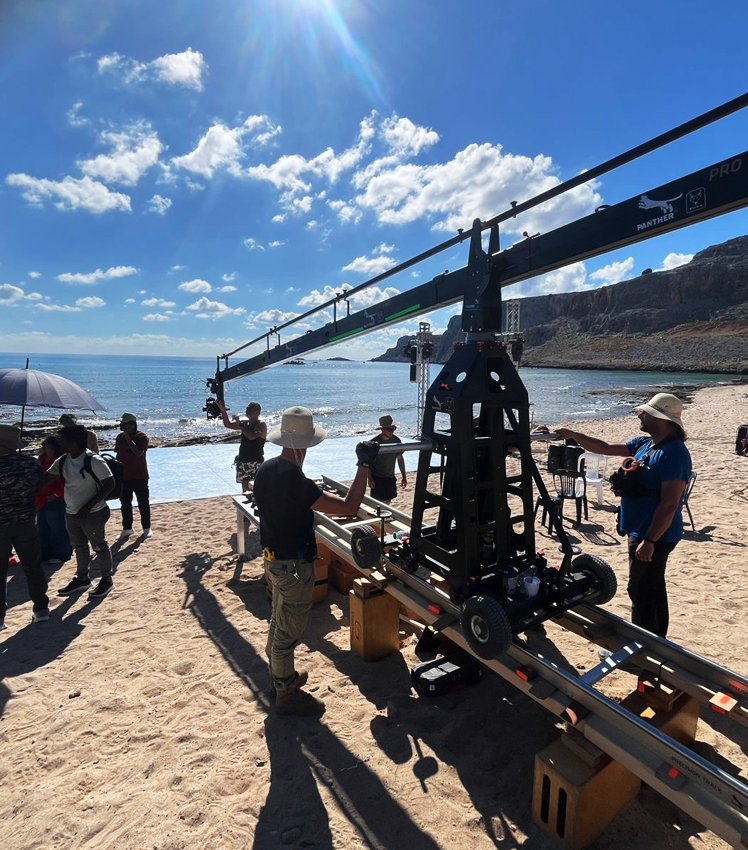
Whether it is an event or a film, television or commercial production, success depends not only on the original idea or the quality of the final result. It also depends on everything that happens in between: planning, preparation, selecting the right people and partners, managing time and costs, and having the ability to deal with the unexpected.

The true value of production lies precisely in bringing all these elements together — in the ability to turn a creative or business objective into a well-organised, efficiently managed and successfully completed project.

OTHER POSTS

Filming in Greece: Everything International Productions Need to Know

Indian cinemas are welcoming an impressive new film production starring renowned Indian actor and pop icon Prabhas. Amid the spectacular scenes, choreographed dance sequences, and exotic settings, audiences are discovering…

What to look for in a production company

Indian cinemas are welcoming an impressive new film production starring renowned Indian actor and pop icon Prabhas. Amid the spectacular scenes, choreographed dance sequences, and exotic settings, audiences are discovering…

Blue Wave Brings Bollywood to Rhodes

Indian cinemas are welcoming an impressive new film production starring renowned Indian actor and pop icon Prabhas. Amid the spectacular scenes, choreographed dance sequences, and exotic settings, audiences are discovering…
Previous
Next